
Apple scab is a common tree disease in Pennsylvania caused by a fungus that affects the leaves and fruit of apple trees, creating dark, olive-colored spots that expand and develop a velvety texture. On fruit, it causes dark, scabby lesions, leading to deformed, unmarketable produce. Though not directly deadly, repeated infections weaken trees by causing defoliation, impairing photosynthesis, and making them more vulnerable to other diseases and pests. This affects both the yield and quality of fruit, causing economic losses. To manage apple scab, hire professional arborists who can accurately diagnose and treat the disease. Professionals apply fungicides at the right time to prevent and control infection and ensure healthier trees.
What does apple scab look like?
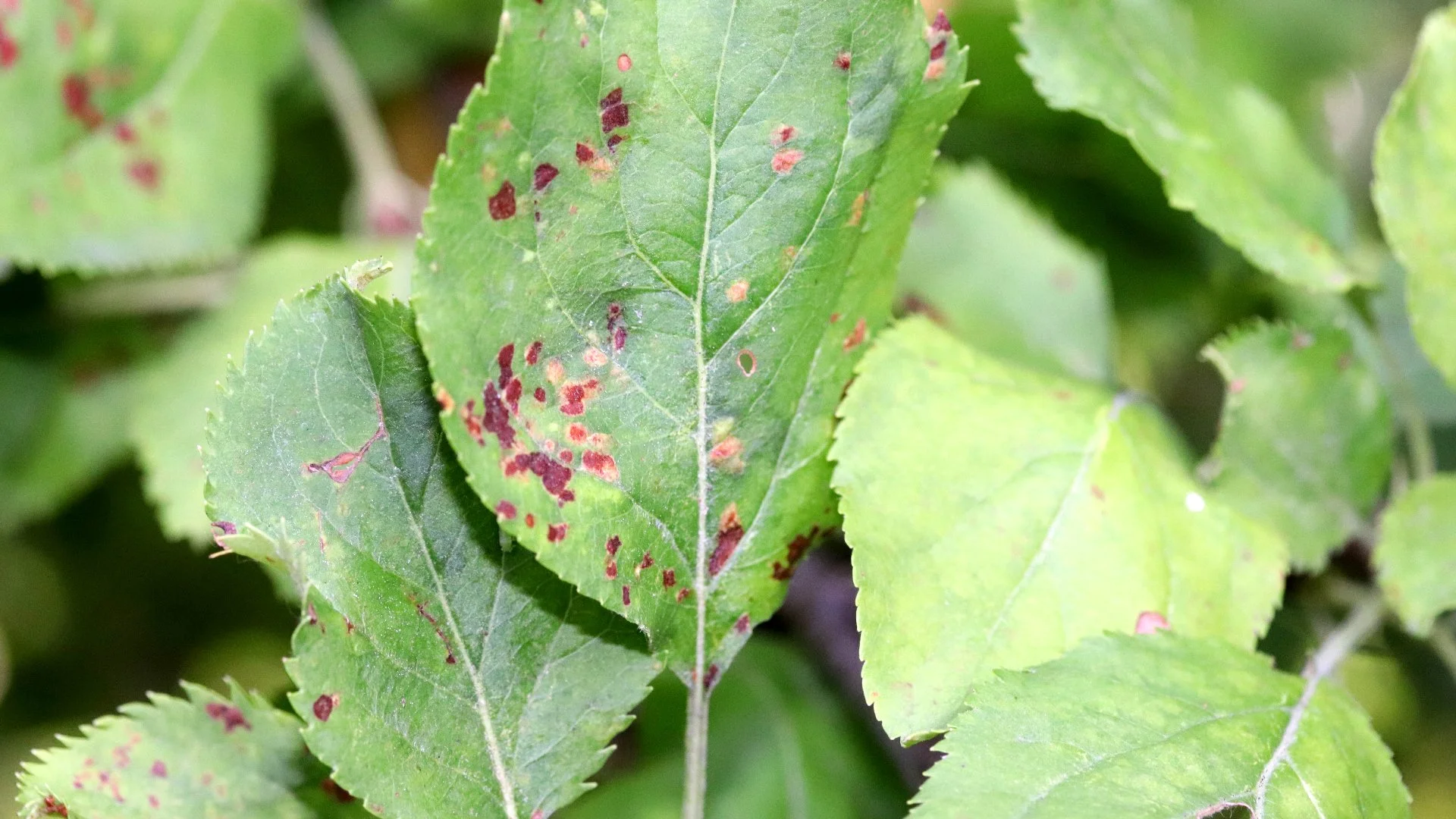
Apple scab is caused by the fungus Venturia inaequalis. It primarily affects the leaves and fruit of apple trees, although it can impact other parts. Infected leaves show dark, olive-colored spots that can grow and merge over time. As the disease progresses, these spots may develop a velvety texture. In the early stages, the lesions are small and can be mistaken for other issues, but they eventually take on a distinct appearance that makes diagnosis easier.
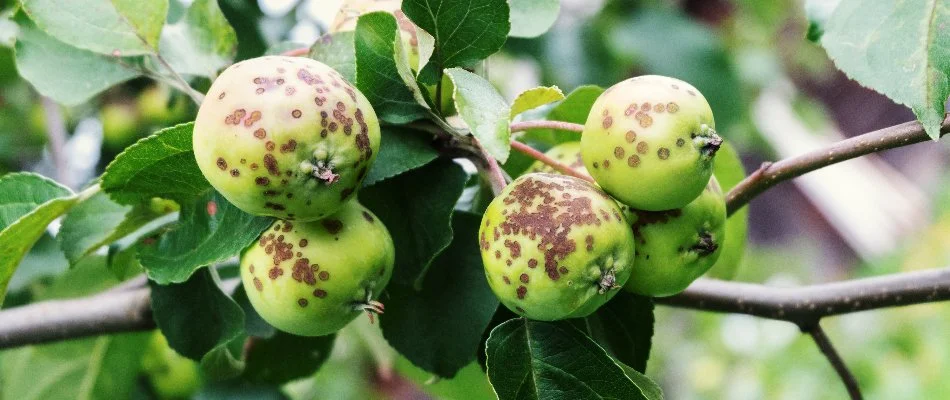
On the fruit, apple scab manifests as similar dark, scabby lesions. These blemishes can cause the fruit to become deformed and reduce its quality, making it unsellable for commercial purposes. Affected fruits may crack or drop prematurely, significantly affecting yield.
How can apple scab damage trees?
While apple scab may not kill a tree directly, it can severely weaken it over time. Repeated infections cause significant defoliation, which impairs the tree's ability to photosynthesize and produce energy. This weakening makes the tree more susceptible to other diseases and pest infestations, further diminishing its vigor.
In fruit-bearing trees, apple scab reduces the quality and quantity of the harvest. The blemished, unmarketable fruits can lead to economic losses for growers. Additionally, the overall aesthetic and structural integrity of the tree can be compromised, affecting its landscape value.
What should you do if your trees are affected by apple scab?
Managing apple scab effectively requires a proactive approach that involves both cultural practices and professional intervention. One of the best steps you can take is to hire professionals who specialize in tree care. They have the expertise and tools required to diagnose the issue accurately and provide effective treatment.
Professional arborists can apply fungicides at the right time to prevent infection spread. They understand the timing of applications, which is critical for controlling apple scab, especially during the early spring when the fungus is most active. Consistent treatments are necessary to ensure that the infection does not recapture its hold on the trees.
Call us today to schedule our tree and shrub care service.
Apple scab is a common fungal disease that affects apple, crabapple, and pear trees in Pennsylvania. This disease can cause significant damage to trees, including defoliation and reduced fruit quality and yield. If you suspect that your tree has apple scab, it's important to take action as soon as possible. At Countywide Landscape, we offer a tree and shrub care service that involves disease control treatments to eliminate apple scab from your trees. As soon as you see signs of apple scab on your trees, reach out to our professionals immediately so we can intervene and stop the disease from spreading further.
We offer our tree and shrub disease control service to commercial and residential property owners, as well as HOAs, in West Chester, Malvern, %%targetarea3, and nearby areas in Pennsylvania. Call us today at (610) 285-9727 to schedule this service and protect your trees from the damaging effects of apple scab.

Comments (0)
Thanks for your comment!
Thanks for your feedback! Your comments have been successfully submitted! Please note, all comments require admin approval prior to display.
Error submitting comment!
There is a problem with your comment, please see below and try again.